August 11, 2020
An initial experiment involved a test subject performing 10 sets of pull-ups to muscle failure with 3-minute rest periods. The purpose was to raise core body temperature in order to test parameters for heat extraction from the hand. One day, after completing 10 sets and cooling down at the end of the session, the subject returned to the bar and performed the same number of pull-ups as in the first set—an outcome that astonished the researchers and led them to conclude that muscle fatigue had disappeared due to the cooling.
After this discovery, the structure of the experiment was changed, and over the next 6 weeks (with 2 workouts per week), the subject was cooled after each 10th set. Over this 6-week study period, the subject increased his total number of pull-ups in a single workout from 100 to 180.
In the following 6 weeks, the subject cooled himself after every second set during the 3-minute rest period within each workout (except on control days). The subject improved from 180 pull-ups to 616 pull-ups, representing a 342% increase.
When analyzing the study, it became clear that the most significant gains occurred on cooling days rather than control days. The researchers also noted a strong conditioning effect, which allowed the elevated performance level achieved during the study period to be maintained even during the control phases without cooling.

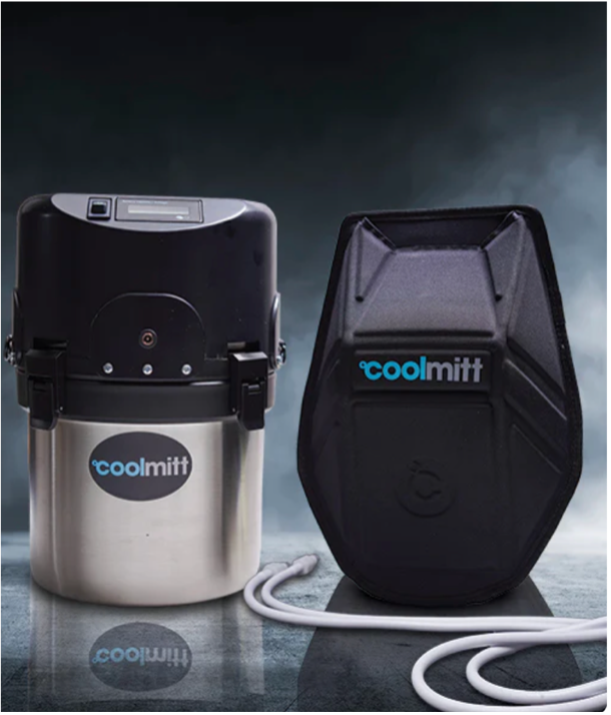
![[Trizep-] Dip Studie mit NFL Tight End](http://www.goonemore.at/cdn/shop/articles/Coolmitt-dips-p-800_jpg_a71f23ef-ffea-4478-a216-39d54e38f642.webp?v=1735504745&width=533)